There have been few artists more intriguing than Carlo Broschi, known by the stage name Farinelli.
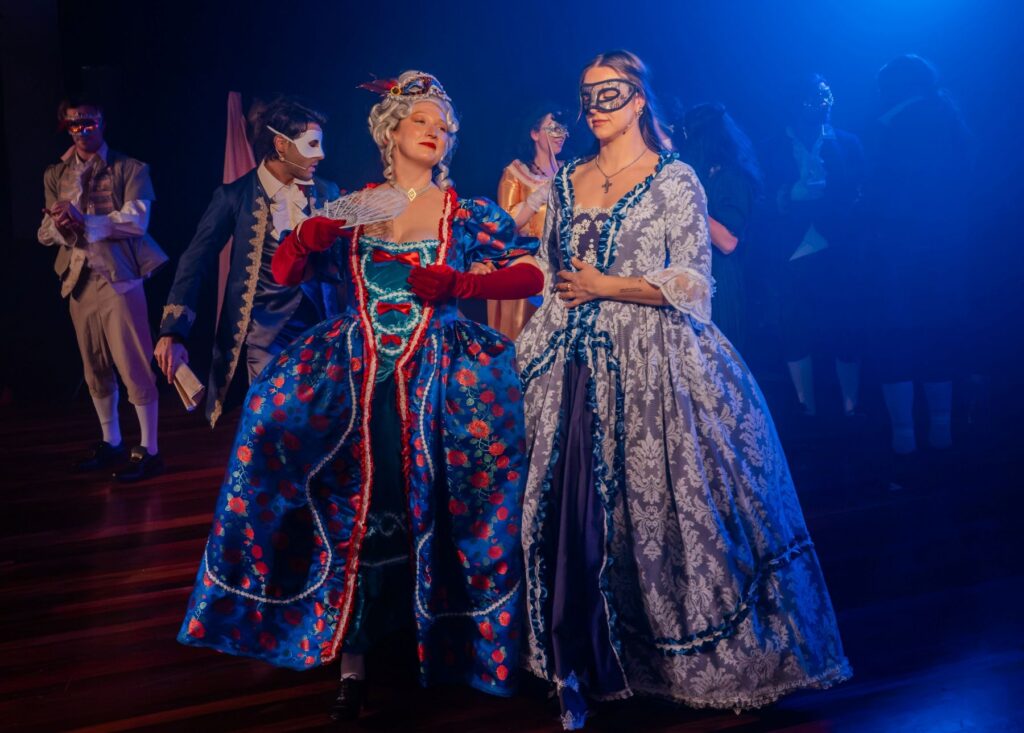
A rock star of the Baroque era, acclaimed for his ethereal soprano singing voice, he was favoured by royals, feted by aristocracy and in more recent times, has been celebrated in books, operas and movies.
But in order to produce the voice that melted the hearts of 18th century European fans, Farinelli was castrated as a child, forced to give up “normal” life to create sublime art, which in turn boosts the fortunes of his mentors and family.
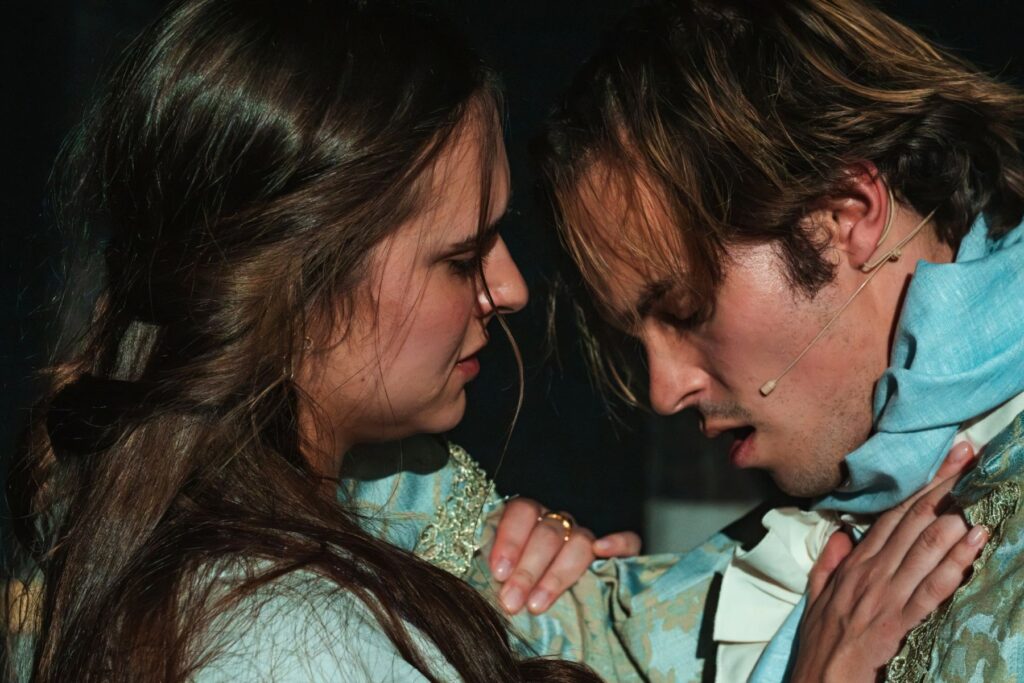
The Sacrifice of Farinelli – the Subverse Theatre production enjoying its premiere season at Footscray’s Bluestone Church Arts Space – offers a new take on the singer’s life.
Debut playwright/director Stuart Bruce’s ambitious production blends the facts of Farinelli’s story with fiction to explore the perils of pursuing artistic perfection and the temptations of fame and fortune, themes that resonate in the stardom and notoriety-obsessed 21st century.
The play opens with Theresa lamenting the disappearance of her lover Farinelli (played by Luca McKenzie) and beseeching his brother, the composer Riccardo Broschi (Jesse Vasiliadis), to help her find the famed performer. Broschi composes for his brother’s voice and is also devastated by the loss of his sibling, creative inspiration, social cachet and, by extension, his meal ticket.
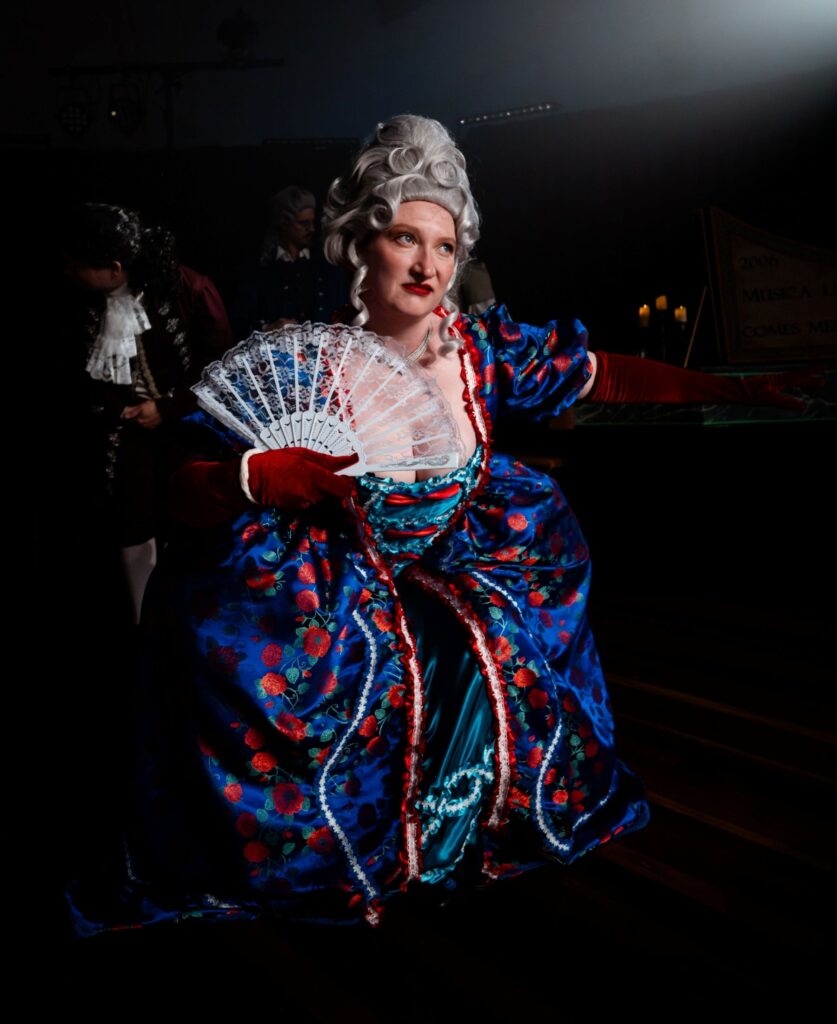
He takes Theresa (Elsa Caruso) and the audience on a journey back through time and music, to the inflection points that turn the helpless child Carlo into the superstar Farinelli. While there’s no sense that he resents the art, he’s scornful of his superfans, uncomfortable with fame and clearly laments what he has lost.
It was not uncommon for Italian families to arrange castration of young sons with vocal talent. Some castrati found fame and perfection by embodying the beauty of a woman’s voice, the purity of a child’s and the power of a man’s. Most, however, did not. If the crude surgery didn’t kill them, they lived removed from society, forbidden by the church to marry because they couldn’t father children.
The doomed love between Carlo and Theresa offers some of the work’s most affecting moments, but the relationship between Riccardo and Carlo is central. They exist in a state of brotherly tension, with one striving in vain for the greatness that has cost the other so much to attain.
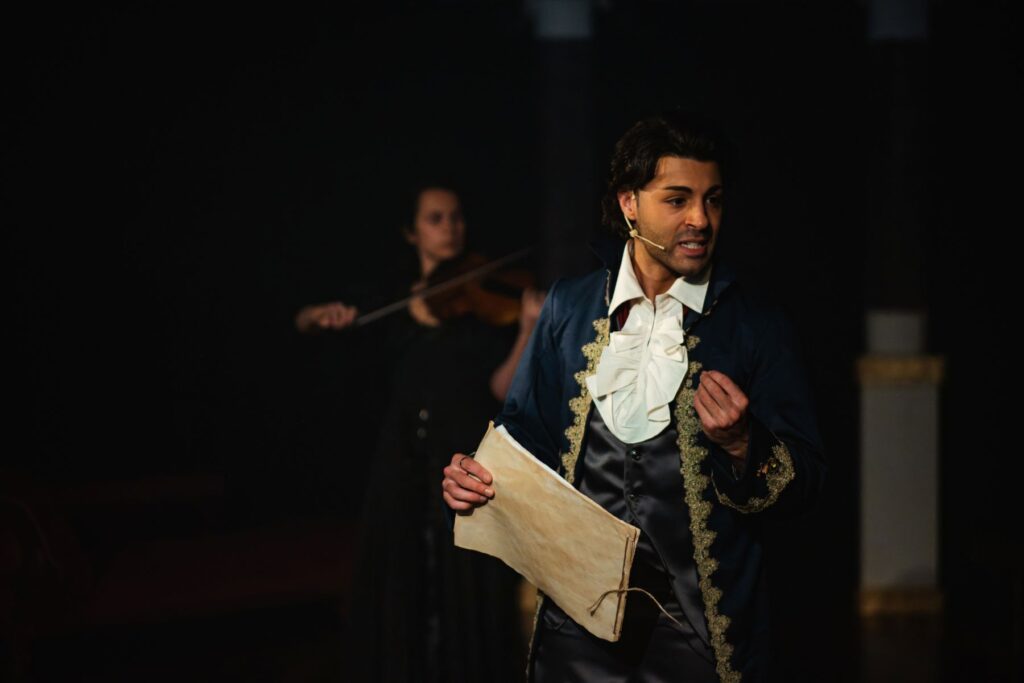
A work about one of history’s most extraordinary singers is, naturally, full of brilliant Baroque music by Vivaldi, Handel, Bach. Recorded, live and as clever digital combinations, it threads its way through the drama, at times overwhelming the dialogue in the intimate space.
The theatre’s past life as a church stakes out a “sacred” shape for the production, and interesting staging makes the most of that shape. The stage size, however, means that some dialogue-heavy scenes with multiple performers seem cramped and difficult to hear.
But with a well-credentialed cast providing plenty of energy, The Sacrifice of Farinelli offers a worthwhile night at the theatre – especially for music lovers – and adds another chapter to our eternal obsession with Farinelli.
The Sacrifice of Farinelli is a production by Subverse Theatre in conjunction with Maribyrnong City Council Arts and Culture. Performances 7.30pm Wednesday to Saturday and 2pm Sundays at Footscray’s Bluestone Church Arts Space, 8A Hyde Street Footscray. The season ends on August 29. Book tickets here.
Michelle Fincke attended the opening night of The Sacrifice of Farinelli as a guest of the production company.
*Photo credit: Barbara Vood


