It’s easy to understand why the Japanese movie Kokuhō has proved a hit with both audiences and critics.
In Japan it became the first movie in 22 years to break the country’s box office record for a domestic live-action film.
The movie features all the ingredients of a hit – at its core it’s the story of a young man whose rise, fall and rise is a true epic tale.
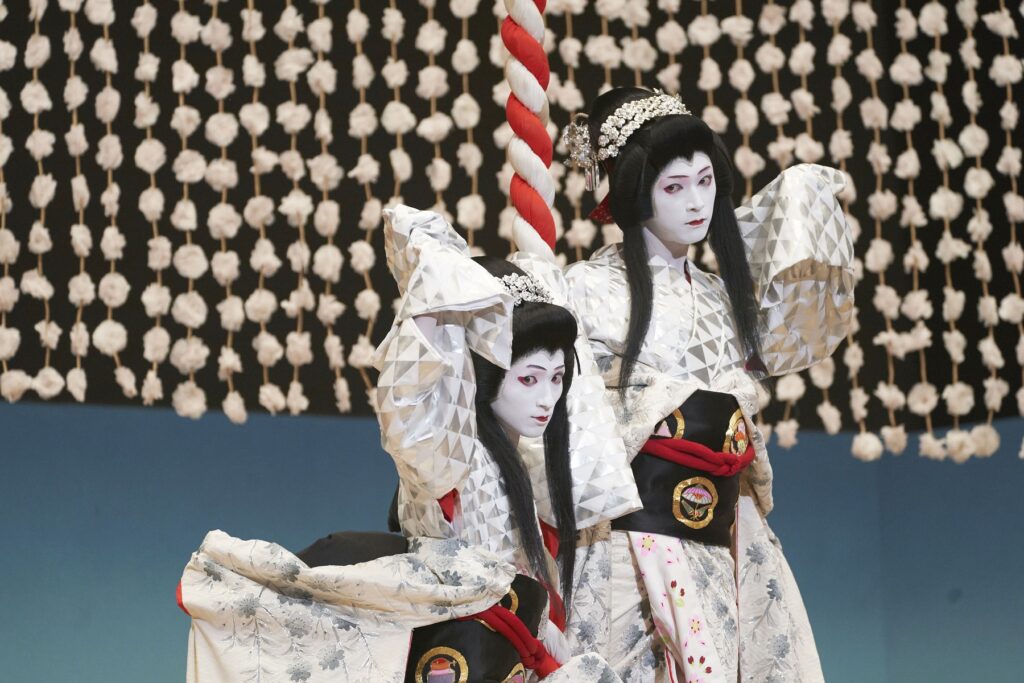
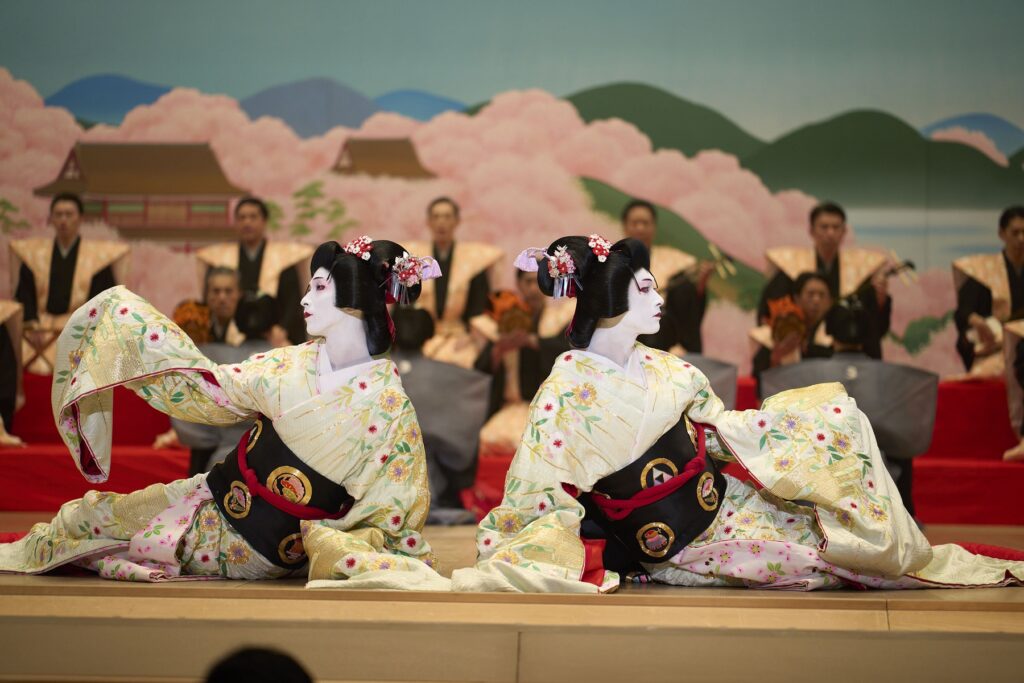
Given its setting – the theatrical world of the kabuki and onnagata (the male actors who play the female roles) – it also provides a fascinating insight into this Japanese art form.
Based on a novel by best-selling novel by Shūichi Yoshida (which translates as ‘National Treasure’) and spanning 50 years, Kokuhō tells the story of Kikuo Tachibana (played by Soya Kurokawa as a teenager and Ryo Yoshizawa as an adult) and his desire to be the best kabuki performer ever.
We first meet Kikuo in 1964 when, as a 14-year-old, he is performing in the bar run by his father Nagasaki (Masatoshi Nagase), the leader of the local yakuza gang.
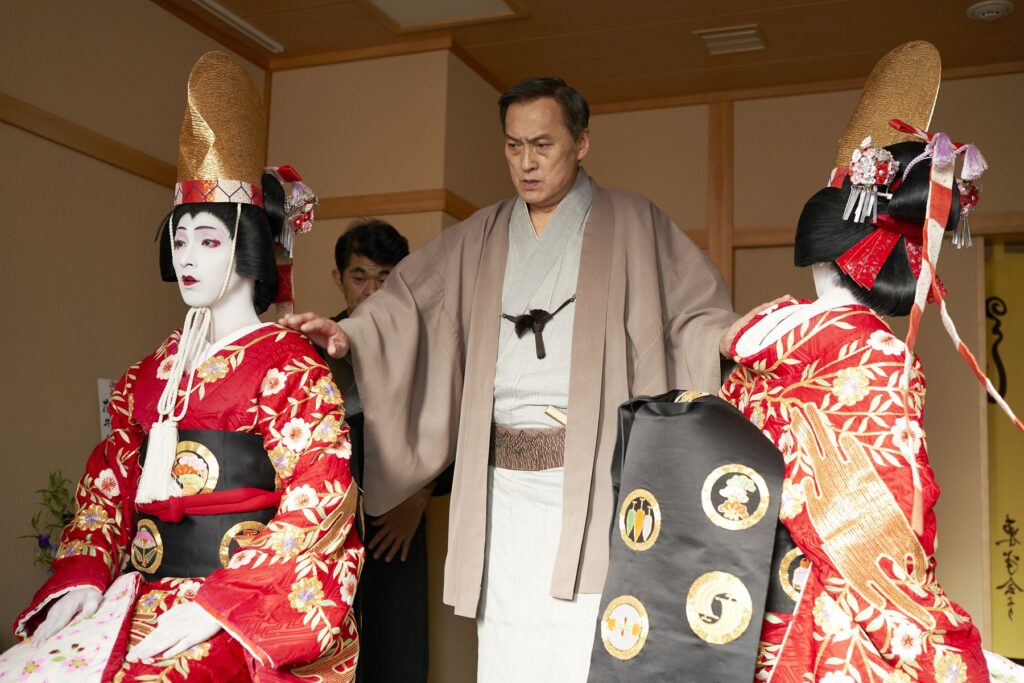
One of the audience members is Hanai Hanjiro (Ken Watanabe) who is part of a lineage of kabuki actors known as the House of Tanba-ya and now heads the bloodline. When Kikuo’s father is murdered in front of him it’s Hanjiro who saves him.
A year later and after Kikuo’s failed attempt to revenge his father’s death, his stepmother (Emma Miyazawa) asks Osaka-based Hanjiro to train Kikuo as a kabuki performer in the hope that he won’t follow in his father’s criminal footsteps.
Despite the concerns of Hanjiro’s wife, Sachiko (Shinobu Terajima), Hanjiro agrees and gives Kikuo the stage name Toichiro Hanai, thus placing him in his kabuki lineage.

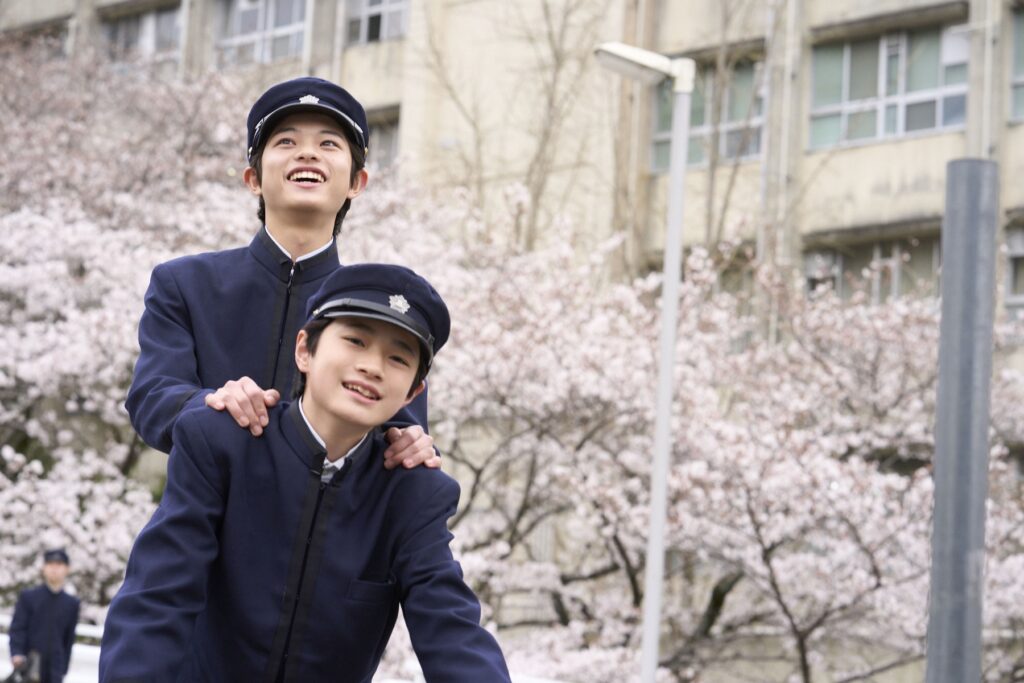
Kikuo joins Hanjiro’s son Shunsuke (Keitatsu Koshiyama as a teenager and Ryusei Yokohama as an adult), who is the same age, in the often brutal training regime Hanjiro inflicts on both boys.
Despite the underlying rivalry between the two, thanks to Hanjiro’s behaviour, they become good friends. That friendship stays in place for a number of years as the two cement their reputations as talented young kabuki performers.
A decision by Hanjiro to appoint Kikuo over Shunsuke in a lead role results in a major falling-out between the two and a feud that lasts for many years.
Kikuo’s single minded determination to become the best ever performer results in him deserting a child he had with a geisha (Ai Mikami) and seducing the daughter (Nana Mori) of an established actor (Ganjiro Nakamura, also the kabuki adviser for the movie). Despite all his efforts he hits rock bottom until a career revival sees him fulfil his dream.
One of the joys of Kokuhō is watching the excellent performances of its stars. All are totally believable. It comes as no surprise to read that Ryo Yoshizawa and Yokohama Keitatsu spent many months training for the roles as a result of director Lee Sang-il’s determination that actors and not kubuki performers be used in the lead roles. They are equally believable on stage as well as off and bring to life their characters often emotional relationship.
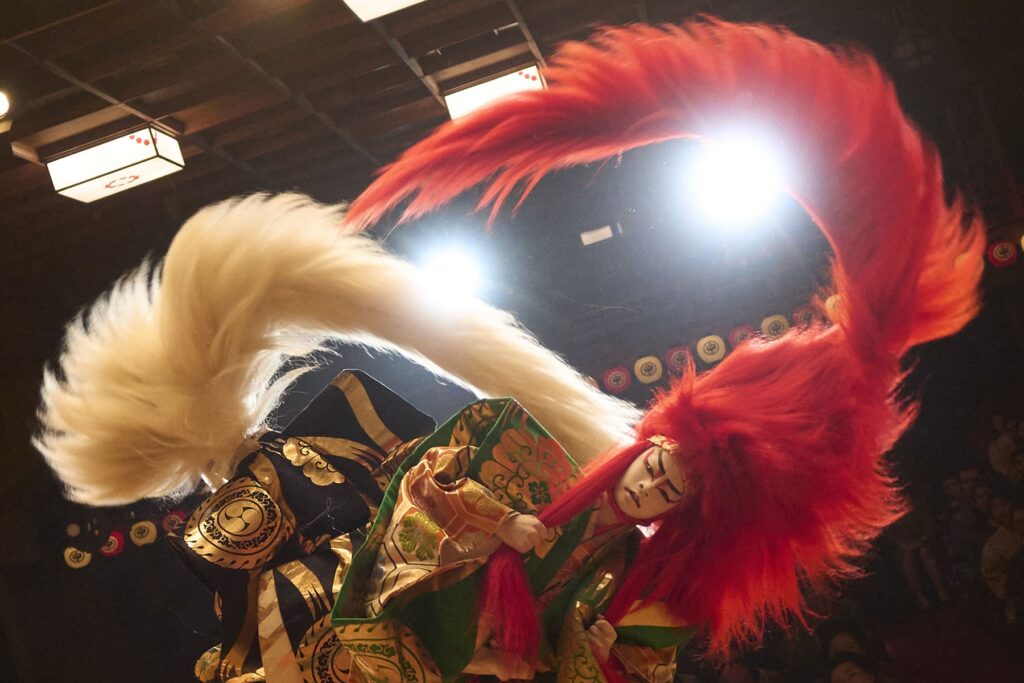
Another of the joys is the chance to learn more about kubuki and all that’s involved in being an onnagata. The film features several scenes from famous shows (the Japanese name of the play appears, along with its English translation and a brief description of the play’s narrative) which illustrate the skill of the performers and showcase some amazing costumes and scene changes.
Backstage scenes illustrate the training involved and the painstaking work of getting the performers prepared.
With a running time of 175 minutes Kokuhō isn’t going to appeal to everyone. But thanks to a captivating storyline, fantastic acting and the ability to learn more about a major part of Japanese culture, it offers plenty to those interested in such things.
Kokuhō is now showing in Australian cinemas.
*Photo credit: ©PalaceFilms


